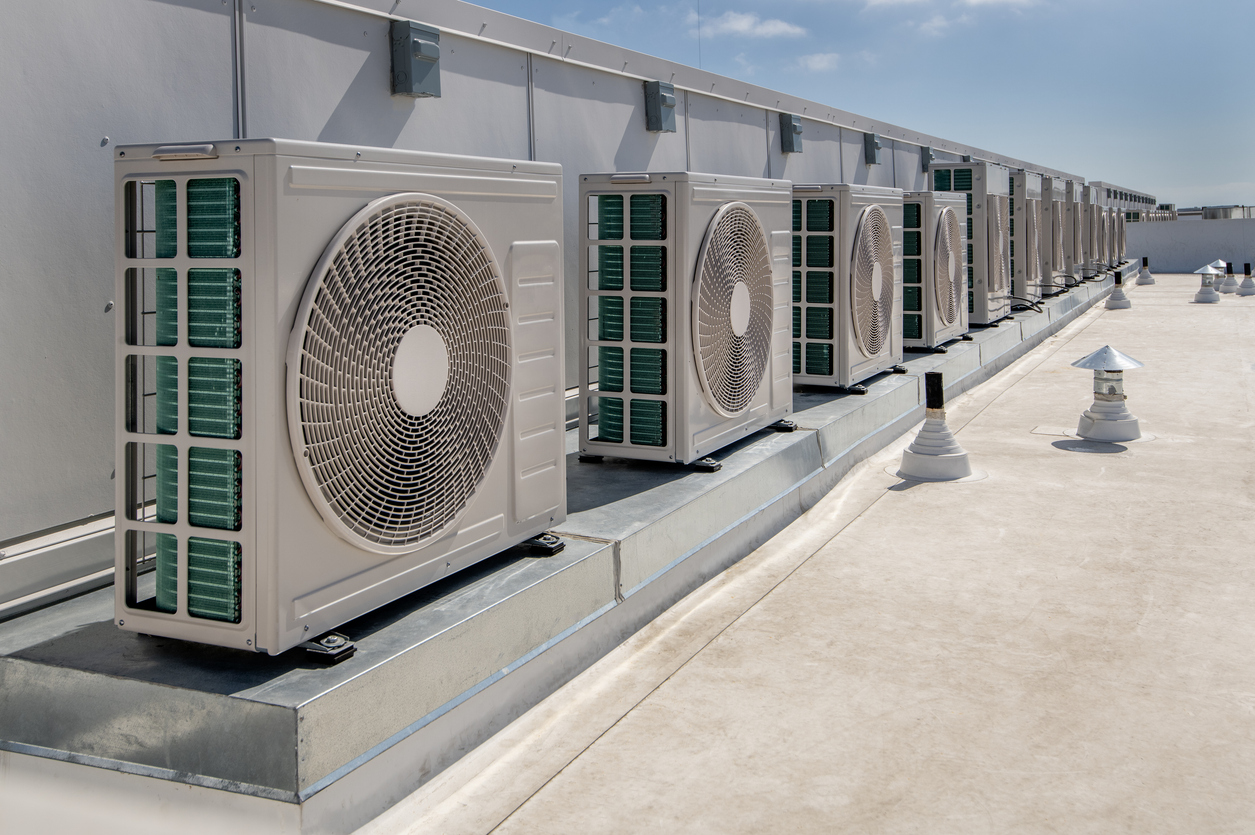
Gas Leak Detection and Monitoring Solutions for HVAC Systems
Heating, ventilation, and air conditioning systems require dependable gas monitoring to maintain safety, efficiency, and reliable performance.
Dynament infrared NDIR gas sensors provide accurate measurement of refrigerants, hydrocarbons, and carbon dioxide. By integrating gas leak detection into HVAC equipment and control systems, manufacturers can identify potential issues earlier, reduce energy losses, and support relevant safety and environmental requirements.
Why Gas Detection Matters in HVAC Systems
Undetected gas leaks and changing gas concentrations can affect the performance and safety of commercial and industrial HVAC systems. Potential consequences include:
- Reduced comfort and indoor air quality
- Lower system efficiency and increased energy consumption
- Fire, explosion, or health hazards
- Failure to meet relevant safety and environmental requirements
The right HVAC sensors provide real-time information that helps control systems respond before a leak or gas buildup affects occupants, equipment, or system performance.
Key Gas Detection Applications in HVAC
Refrigerant Leak Detection
Refrigerants such as R-32, R-454 blends, R-290, and R-744 may create safety or environmental risks if released from an HVAC or refrigeration system.
Early refrigerant leak detection can:
- Reduce the loss of refrigerant and energy
- Help limit greenhouse gas emissions
- Protect equipment from damage
- Support relevant refrigerant safety and environmental requirements
- Allow alarms, ventilation, or other mitigation measures to activate promptly
Recommended Refrigerant Gas Sensors
Refrigerant Infrared Gas Sensors – Platinum Series
These temperature-compensated refrigerant gas sensors provide accurate monitoring for air-conditioning and chiller systems. Their high-resolution output supports continuous gas leak detection and integration into modern HVAC controls.
Refrigerant Infrared Gas Detector – Axiom Series
The Axiom gas leak detector provides high-resolution refrigerant measurement using non-dispersive infrared technology. It offers a long operating life, requires no calibration, and is certified to UL 60335-2-40 Annex LL for reliable use in demanding HVAC and chiller applications.
Hydrocarbon Gas Detection
Hydrocarbon gases can accumulate in air-handling units, mechanical rooms, and plant areas. A methane gas sensor or hydrocarbon gas sensor can identify gases such as methane, propane, and butane before they reach potentially hazardous concentrations.
Hydrocarbon monitoring can:
- Provide early warning of methane and propane leaks
- Support automatic alarms and ventilation controls
- Help protect occupants, equipment, and critical infrastructure
- Improve the safe operation of HVAC systems in areas where flammable gases may be present
Recommended Hydrocarbon Gas Sensors
Hydrocarbon Infrared Gas Sensors – Platinum Series
Dynament Platinum Series sensors provide accurate methane and propane detection with linearised outputs. Low-power options support integration into building systems, safety equipment, and intelligent ventilation controls.
CO₂ Monitoring for Indoor Air Quality
Elevated carbon dioxide concentrations can affect comfort and cognitive performance in occupied spaces. Integrating a CO₂ sensor into an HVAC system allows ventilation to respond to actual occupancy and air quality conditions.
Continuous CO₂ monitoring can:
- Improve ventilation control
- Support better indoor air quality
- Enable demand-controlled ventilation
- Reduce unnecessary energy consumption when additional ventilation is not required
Recommended CO₂ Sensors for HVAC
Carbon Dioxide Infrared Gas Sensors – Platinum Series
These sensors offer measurement ranges from 500 ppm to 100% CO₂, dual-gas capability, and a stable output for accurate air quality monitoring and ventilation control.
Integration with Smart HVAC Controls
Dynament gas sensors can support connected HVAC systems by supplying real-time gas concentration data to building management and control platforms.
This data can be used to:
- Activate alarms and ventilation when a gas leak is detected
- Support demand-controlled ventilation
- Optimise the operation of energy recovery ventilators
- Improve system efficiency using real-time gas measurements
- Reduce component count through dual-gas sensing
Flexible analogue and digital outputs allow the sensors to be integrated into new HVAC equipment or added to existing infrastructure.
Dynament Gas Detection Products for HVAC
Platinum Hydrocarbon Gas Sensors
Dynament Platinum Series NDIR sensors detect flammable hydrocarbon gases commonly found in HVAC-related environments, including methane, propane, and butane.
Key characteristics include:
- Factory calibration for easier integration
- Compact and durable construction
- Low maintenance requirements
- Stable and repeatable long-term performance
These sensors support safe system operation, indoor air quality applications, and automated gas ventilation monitoring.
Learn more about Hydrocarbon Platinum Sensors
Low-Power Dual-Gas Hydrocarbon and CO₂ Sensor
The Low-Power Dual-Gas sensor combines hydrocarbon and carbon dioxide measurement in one compact module. This reduces system complexity and makes the sensor suitable for smart HVAC platforms and confined-space monitoring.
Key benefits include:
- Simultaneous hydrocarbon and CO₂ detection
- Digital communication for intelligent control systems
- Low power consumption
- Fewer components and simplified integration
- Real-time data for ventilation control
- Hazardous-area certification options
Learn more about the Low-Power Dual-Gas Sensor
Why Choose Dynament NDIR Gas Sensors?
Dynament infrared gas sensors offer:
- Field-proven NDIR measurement technology
- Reliable operation in demanding HVAC environments
- Flexible integration into new and retrofit systems
- Options for refrigerants, hydrocarbons, and carbon dioxide
- Technical guidance from initial product selection through deployment
Whether developing a new generation of HVAC equipment or upgrading an existing system, Dynament provides gas detection technology designed to support reliable and efficient operation.
Contact Us Today
Need support selecting the right gas leak detector or integrating Dynament sensors into your HVAC system?
Contact our experts to discuss your application requirements.
Our team can support your project from initial concept and sensor selection through integration and deployment.
