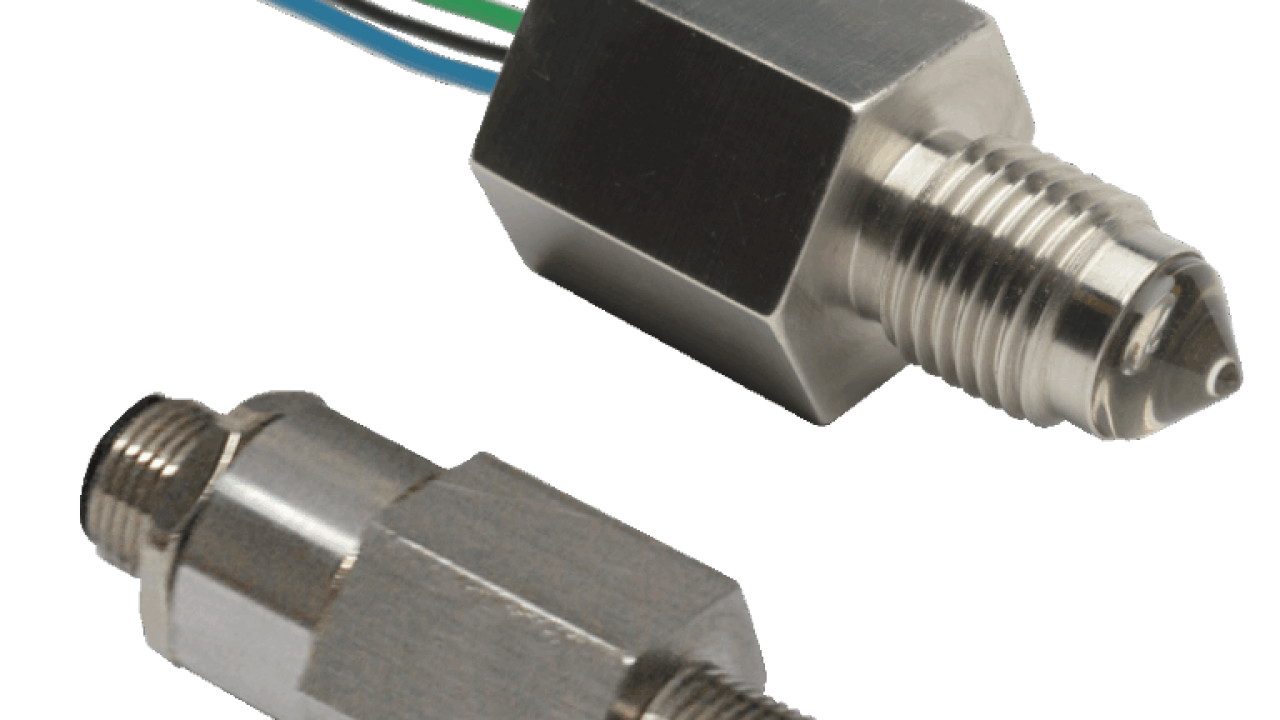
Optical fluid level switches provide point-level detection by identifying whether liquid is present or absent at a specific position. Unlike continuous level measurement devices, they do not measure the total volume or depth of liquid within a tank. SST Sensing offers a range of optical liquid level switches for OEM, industrial, medical, food and beverage, chemical-handling, and other applications. Each range offers different materials, electrical outputs, temperature limits, and mounting options.
Selecting the right switch requires more than choosing a suitable size. The process fluid, installation environment, operating temperature, pressure, electrical requirements, and sensor materials must all be considered to ensure reliable performance.
Before Selecting an Optical Level Switch
Begin by reviewing the complete application rather than considering the sensor specification in isolation. The following factors can help narrow down the available options.
- Mounting Position
Identify where and how the optical fluid level switch will be installed.
Consider:
- Available installation space
- Internal or external mounting
- Horizontal or vertical installation
- Required mounting thread
- Position of the desired switching point
- Accessibility for installation and maintenance
Space restrictions and the available mounting surface may determine which sensor housing and connection style are most appropriate.
- Application Type
The industry and process can introduce specific material, performance, and integration requirements.
For example:
- Food and beverage equipment may require suitable food-contact materials.
- Medical devices may need compact sensors with consistent and repeatable switching.
- Chemical-handling systems require careful evaluation of material compatibility.
- Industrial equipment may require higher voltages or direct load-driving capability.
- High-volume OEM applications may prioritize compact design and cost-effective integration.
Understanding how the liquid level detection sensor will be used helps identify the most suitable product range.
- Environmental and Process Conditions
The operating environment directly affects sensor selection. Important conditions include:
- Liquid type
- Chemical compatibility
- Corrosive or non-corrosive media
- Minimum and maximum temperature
- System pressure
- Exposure to cleaning chemicals
- Electrical supply and output requirements
All wetted materials should be evaluated against the process liquid under actual operating conditions.
Step 1: Select the Appropriate Sensor Material
Material selection is essential because the housing and sensing tip may remain in direct contact with the process fluid.
Available SST material options include:
- Housing materials: Polysulfone, Trogamid®, or stainless steel
- Sensing-tip materials: Polysulfone, Trogamid®, or glass
Trogamid® options are available for applications requiring EU food-contact-grade materials. Stainless steel and glass configurations are designed for more demanding temperature, pressure, or chemical environments.
In some optical level switches, the sensor body and sensing tip use different materials. Both components should therefore be checked for compatibility with the process fluid.
Step 2: Compare SST Optical Fluid Level Switch Ranges
SST offers 6 main ranges of optical fluid level switches. Each is designed for particular electrical, environmental, and application requirements.
Optomax Digital Range
The Optomax Digital range provides compact and cost-effective point-level detection for low-power applications and installations with limited space.

Key specifications:
- Supply voltage: 4.5–15.4 VDC
- Temperature options: −25 to +80 °C or −40 to +125 °C
- Materials: Polysulfone or Trogamid®
Suitable for: Miniature liquid level detection in confined spaces and compact OEM equipment.
Optomax Industrial Range
Optomax Industrial switches are designed for systems that require higher voltage options or direct load-driving capability.

Key specifications:
- Supply voltage: 4.5–15.4 VDC or 8–30 VDC
- Temperature options: −25 to +80 °C or −40 to +125 °C
- Materials: Polysulfone or Trogamid®
- Switching current: Up to 1 A, depending on the output configuration
Suitable for: Industrial equipment requiring a stronger output signal or direct load control.
Optomax Industrial Glass
The Optomax Industrial Glass range combines a stainless steel body with a glass sensing tip for chemically aggressive and demanding environments.

Key specifications:
- Supply voltage: 4.5–15.4 VDC or 8–30 VDC
- Operating temperature: −40 to +125 °C
- Materials: Stainless steel body and glass sensing tip
Suitable for: Applications involving elevated pressure, high temperatures, or aggressive chemicals.
LLHP High-Performance Series
The LLHP range provides robust construction and multiple mounting options for demanding industrial applications.

Key specifications:
- Supply voltage: 4.5–15.4 VDC or 10–45 VDC
- Temperature options: −25 to +80 °C or −40 to +125 °C
- Materials: Stainless steel body and Polysulfone sensing tip
Suitable for: Industrial environments requiring different mounting threads, robust construction, or higher switching currents.
POS Series
The POS range is engineered for extreme temperatures and aggressive chemical environments.

Key specifications:
- Supply voltage: 12–28 VDC
- Temperature options: −25 to +100 °C or −40 to +140 °C
- Materials: Stainless steel body and SIMAX crystal glass sensing tip
Suitable for: Harsh industrial processes involving extreme temperatures or chemical exposure.
Optomax Basic
Optomax Basic provides an analog output for high-volume, cost-sensitive OEM designs.

- Key specifications:
- Supply voltage: 3.3–24 VDC
- Operating temperature: −25 to +80 °C
- Materials: Polysulfone or Trogamid®
Suitable for: White goods, vending machines, automotive systems, and other high-volume OEM applications.
Optomax Basic requires a stable power supply and an external microcontroller to interpret the sensor output.
Step 3: Test the Selected Sensor
Published specifications and material compatibility information provide an important starting point, but testing the selected optical fluid level switch in the real application is strongly recommended.
The standard SST recommendation is to test a sample sensor:
- Fully submerged in the actual process liquid
- At the maximum expected operating temperature
- For a minimum period of 2 weeks
Application testing helps confirm material compatibility, switching performance, installation suitability, and long-term reliability under representative conditions.
Need Help Selecting an Optical Fluid Level Switch?
Choosing the correct sensor depends on the combined requirements of the liquid, environment, electrical system, and installation.
The SST Sensing engineering team can help you compare materials, outputs, mounting options, and product ranges to identify the most suitable optical level switch for your application.
Contact SST Sensing to discuss your liquid level detection requirements.