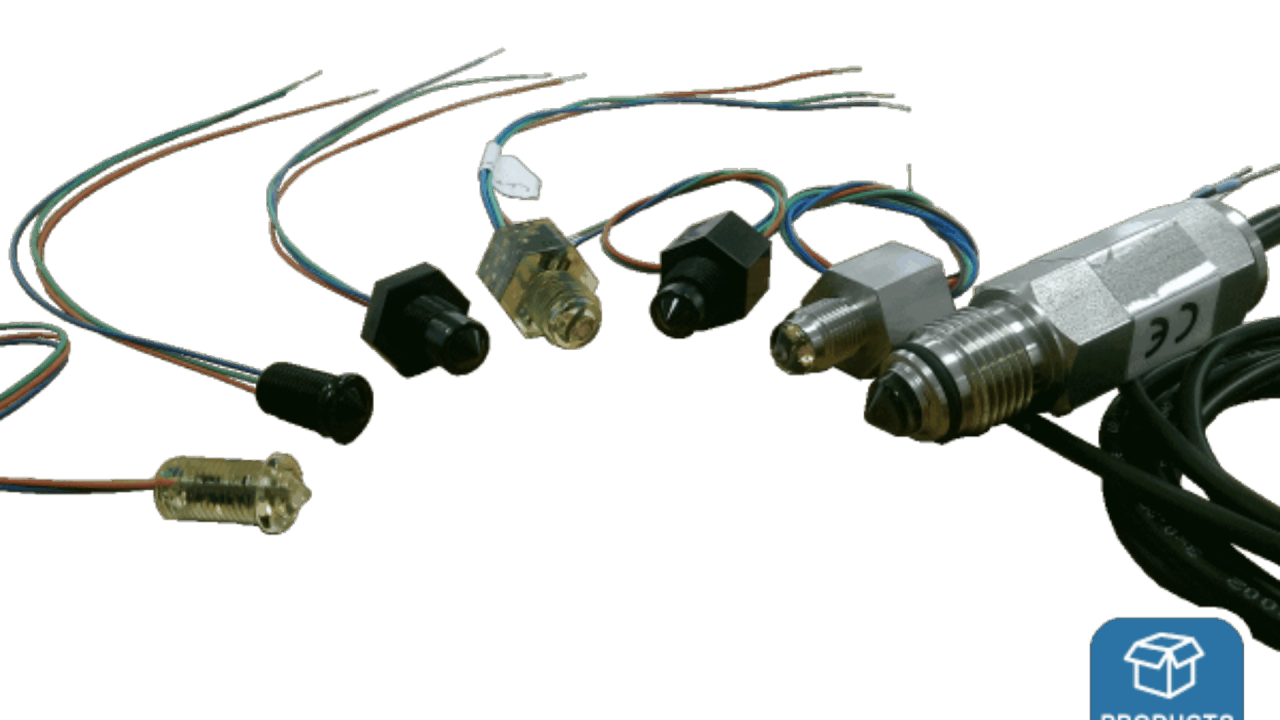
Optical liquid level sensors, also known as fluid level switches, are compact solid-state devices that detect whether liquid is present or absent at a defined point. They use infrared technology to provide fast and reliable point-level detection without mechanical moving parts.
These sensors can support 2 essential functions: early leak detection and high- or low-level control. When integrated into equipment, they can trigger an alarm, activate a pump, stop a process, or initiate another predefined action.
Across telecommunications, industrial automation, medical equipment, food and beverage production, and aerospace systems, optical liquid level switches help protect equipment from leaks, overfilling, and dry-run conditions.
How Optical Liquid Level Sensors Work
An optical liquid level sensor contains an infrared LED and a phototransistor positioned inside a transparent sensing tip.
Its operation depends on the way infrared light behaves at the boundary between the sensing tip and the surrounding medium:
- Dry state: When the sensor tip is surrounded by air, infrared light is internally reflected within the tip and returns to the phototransistor.
- Wet state: When liquid covers the tip, some of the infrared light refracts into the liquid. Less light reaches the phototransistor, causing the sensor output to change.
- Output signal: The equipment controller interprets this change as the presence or absence of liquid and performs the required action.
Unlike mechanical float switches, optical liquid level sensors contain no moving sensing components. Their solid-state design helps reduce wear and supports fast, repeatable operation in compact equipment.
Main Uses of Optical Liquid Level Sensors
Optical fluid level switches are primarily used for leak detection and single-point level control.
Leak Detection
A sensor installed at a potential collection point can detect liquid before the accumulation causes extensive damage. The resulting signal can activate an alarm, notify a maintenance team, or shut down affected equipment.
Single-Point Level Control
One or more sensors can be installed at defined positions within a tank or reservoir. A low-level switch can protect a pump from running dry, while a high-level switch can stop filling before an overflow occurs.
These functions support automated filling and emptying while helping reduce fluid loss, equipment damage, and unplanned downtime.
Leak Detection Applications

Telecommunications Equipment
Outdoor telecommunications infrastructure, including base stations and metrocell enclosures, may be exposed to rainwater ingress. Even a limited amount of water can cause corrosion, electrical faults, or system failure.
An optical water leak sensor installed at the bottom of the enclosure can provide early warning when water begins to collect. Maintenance teams can then investigate the problem before it causes extensive damage or a service interruption.

Robotic Automation Systems
Industrial robots depend on lubricating oils to protect gears, bearings, and moving joints. An undetected oil leak can affect performance, contaminate nearby equipment, and eventually cause an unexpected shutdown.
Positioning an optical liquid level sensor below a potential leak point provides rapid detection of escaping lubricant. The sensor output can support maintenance alerts or protective shutdowns before the fluid loss leads to more expensive damage.

Peristaltic Pumps
Peristaltic pumps are used for contamination-controlled fluid transfer in food and beverage, pharmaceutical, medical, and semiconductor applications. Although the fluid remains inside flexible tubing, repeated operation can eventually cause the tube to wear or fail.
Installing an optical sensor within a sump or collection area beneath the pump enables early detection if fluid escapes. This can limit product loss, protect the pump, and reduce contamination or cleanup requirements.
Single-Point Level Control Applications
Liquid levels change continuously in tanks, reservoirs, and process equipment. Without dependable level detection, a system may overfill or continue operating after the available liquid has fallen below a safe level.
Optical liquid level switches can provide high- and low-level detection across applications including:
- Industrial and automotive systems: Monitoring hydraulic fluid, transmission fluid, coolant, and lubricants in vehicles, off-road equipment, and stationary machinery.
- Medical devices: Maintaining required liquid levels in neonatal incubators, dialysis machines, and diagnostic equipment.
- Process control: Preventing overflow and dry-run conditions in manufacturing, chemical dosing, and water-treatment equipment.
- Food and beverage equipment: Supporting liquid presence detection during dosing, mixing, dispensing, and filling processes.
- Aerospace and defense systems: Monitoring water separators, torpedo tubes, and other fluid-dependent equipment.
The switch signal can be integrated with the equipment controller to start or stop a pump, open or close a valve, activate an alarm, or shut down the process safely.
Advantages of Optical Liquid Level Switches
Optical liquid level sensors provide several benefits for leak detection and level control:
- Fast response: The optical principle allows the sensor to respond quickly when the tip changes between wet and dry states.
- Compact design: Small sensor dimensions support integration into equipment with limited installation space.
- No moving parts: Solid-state operation reduces mechanical wear and maintenance requirements.
- Point-level accuracy: The sensor provides repeatable detection at a defined position.
- Flexible integration: Multiple housing materials, mounting options, voltages, and outputs are available.
- Liquid compatibility: Suitable models can detect many water- and oil-based liquids when sensor materials and optical performance are validated for the application.
- Cost-effective protection: Early detection can help prevent equipment damage, fluid loss, and costly downtime.
The sensor material, process fluid, temperature, pressure, mounting arrangement, and environmental conditions should always be evaluated before selecting a model.
Reliable Liquid Detection with SST Sensing
SST Sensing offers optical liquid level switches for leak detection and single-point level control across telecommunications, medical, industrial, food and beverage, automotive, aerospace, and defense applications.
Different sensor ranges provide options for compact OEM integration, demanding industrial environments, aggressive chemicals, elevated temperatures, and high-pressure systems. Application testing and correct material selection help ensure reliable performance under real operating conditions.
Whether the requirement is detecting water inside a telecommunications enclosure, identifying an oil leak in industrial equipment, or controlling liquid levels within a medical device, SST optical level sensors provide dependable point-level monitoring.
To discuss your application, contact SST Sensing.