Oxygen Monitoring in Argon-Purged Build Chambers
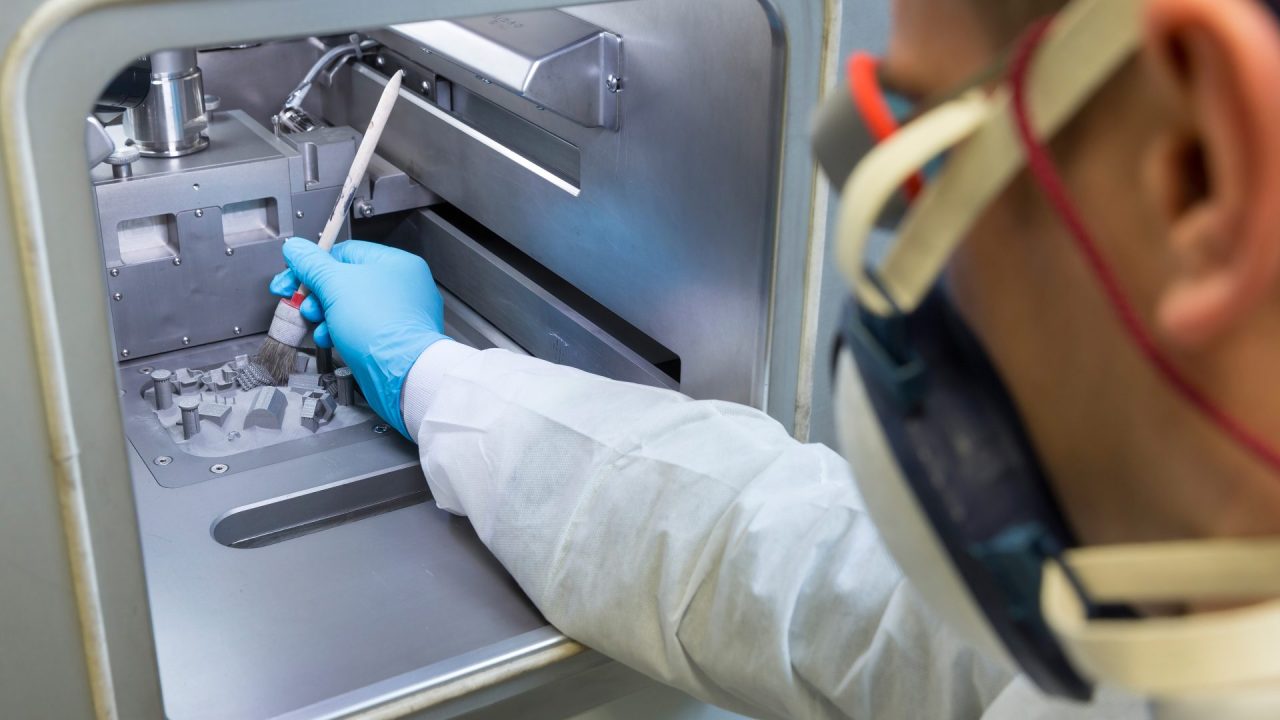
Laser-based metal additive manufacturing processes, including laser powder bed fusion and Selective Laser Melting, require a controlled build chamber atmosphere.
Before printing begins, the chamber is commonly purged with argon or another suitable inert gas to displace oxygen. The oxygen concentration must then remain within the limits established for the material, machine, and process throughout the build.
Uncontrolled oxygen can contribute to powder oxidation, inconsistent layer bonding, porosity, and changes in the mechanical properties of the finished component. Reactive materials such as titanium alloys can be particularly sensitive to atmospheric contamination.
A zirconia oxygen sensor continuously measures residual oxygen within the inert gas environment. This information allows the machine controller to verify purge performance, identify oxygen ingress, and maintain repeatable conditions during printing.
Oxygen Monitoring Challenges in Additive Manufacturing
Metal additive manufacturing presents several challenges for oxygen measurement.
Maintaining Low Oxygen Concentrations
The acceptable oxygen limit depends on the metal powder and production process. The sensor must detect changes at the concentrations required by the application and provide stable measurements within an argon-rich atmosphere.
Validating the Purge Cycle
Before the build begins, the chamber must reach its specified oxygen threshold. Starting too early may expose the powder and initial layers to an unsuitable atmosphere.
Real-time measurement allows the control system to confirm that sufficient oxygen has been displaced before enabling the build.
Detecting Oxygen Ingress
Seals, valves, connections, and gas-delivery components may allow air to enter the chamber. An unexpected increase in oxygen can indicate incomplete purging or a developing leak.
The oxygen sensor cannot identify the physical location of the leak, but its measurement can prompt an alarm, pause, or other predefined action.
Operating Through Long Build Cycles
Complex parts may require builds lasting many hours or days. Oxygen measurement must remain stable throughout the complete process, with minimal drift and dependable response to atmospheric changes.
Managing Temperature and Gas Cycling
Purging, printing, cooling, and chamber opening expose the monitoring system to repeated changes in temperature and gas composition. The sensor and its housing must be selected for the conditions at the chosen measurement point.
Why Zirconia Oxygen Sensors Suit Metal AM
Sensore Electronic zirconia sensors provide precise oxygen measurement across controlled-atmosphere applications.
Important capabilities include:
- Oxygen measurement in argon: Suitable sensor configurations can measure residual oxygen within argon-purged environments.
- Fast response: Rapid detection helps the control system identify incomplete purges or oxygen ingress.
- Long-term stability: Stable output supports extended builds and repeatable process monitoring.
- Non-depleting technology: The zirconia sensing element is not consumed during normal measurement.
- Wide measurement capability: Available configurations support applications ranging from trace oxygen to percentage-level measurement.
- Compact integration: Multiple sensor housings and mounting options support incorporation into OEM additive manufacturing equipment.
- Continuous operation: Zirconia technology is suitable for ongoing process measurement when operated within the sensor’s specified conditions.
The appropriate sensor should be selected according to the required oxygen range, sample flow, pressure, gas composition, temperature, response time, and installation arrangement.
Applications in Additive Manufacturing Systems
Argon Purge Validation
The oxygen sensor confirms when the chamber has reached the required atmospheric condition before printing begins.
Instead of relying only on a fixed purge time, the controller can use measured oxygen concentration to determine whether the chamber is ready. This can provide more reliable purge validation when chamber loading or operating conditions change.
Continuous Build Chamber Monitoring
Oxygen concentration can be measured throughout the print to verify atmosphere stability.
If the reading exceeds a defined limit, the machine controller can alert the operator, adjust the gas flow, pause the build, or initiate another process-specific response.
Oxygen Ingress Detection
A rising oxygen concentration may indicate air entering through a seal, connection, valve, or gas-delivery component.
Early detection allows the issue to be investigated before extended exposure affects the powder or printed component.
Purge and Gas-Flow Optimization
Measured oxygen data can help engineers evaluate purge duration and inert gas flow.
When integrated into the process control strategy, this information may help reduce unnecessary argon consumption while ensuring that the required oxygen threshold is achieved and maintained.
Process Quality and Traceability
Recording oxygen concentration throughout a build provides useful quality data. The resulting process record can support troubleshooting, internal validation, customer documentation, and comparison between production batches.
Oxygen data should be considered alongside other relevant process parameters, including temperature, pressure, gas flow, laser settings, and powder condition.
Selecting an Oxygen Sensor for an AM System
The oxygen measurement requirement should be defined before selecting a sensor.
Important considerations include:
- Required oxygen measurement range
- Acceptable accuracy and response time
- Argon flow and pressure
- Sensor location
- Direct or sampled-gas measurement
- Build chamber temperature
- Expected contaminants
- Electrical output and controller interface
- Maintenance and calibration strategy
- Required process alarms and shutdown actions
Testing the selected sensor under representative machine and process conditions helps verify its performance before full integration.
Stable Oxygen Control with Sensore Electronic
Reliable oxygen measurement supports atmosphere control throughout argon purging and metal printing. It helps AM equipment verify chamber readiness, detect oxygen ingress, maintain stable builds, and document production conditions.
Sensore Electronic zirconia oxygen sensors offer multiple measurement ranges, housings, and integration options for additive manufacturing and other controlled-atmosphere applications.
Contact the team for help selecting an oxygen sensor for your AM system.
View the available oxygen sensor datasheets for detailed specifications.