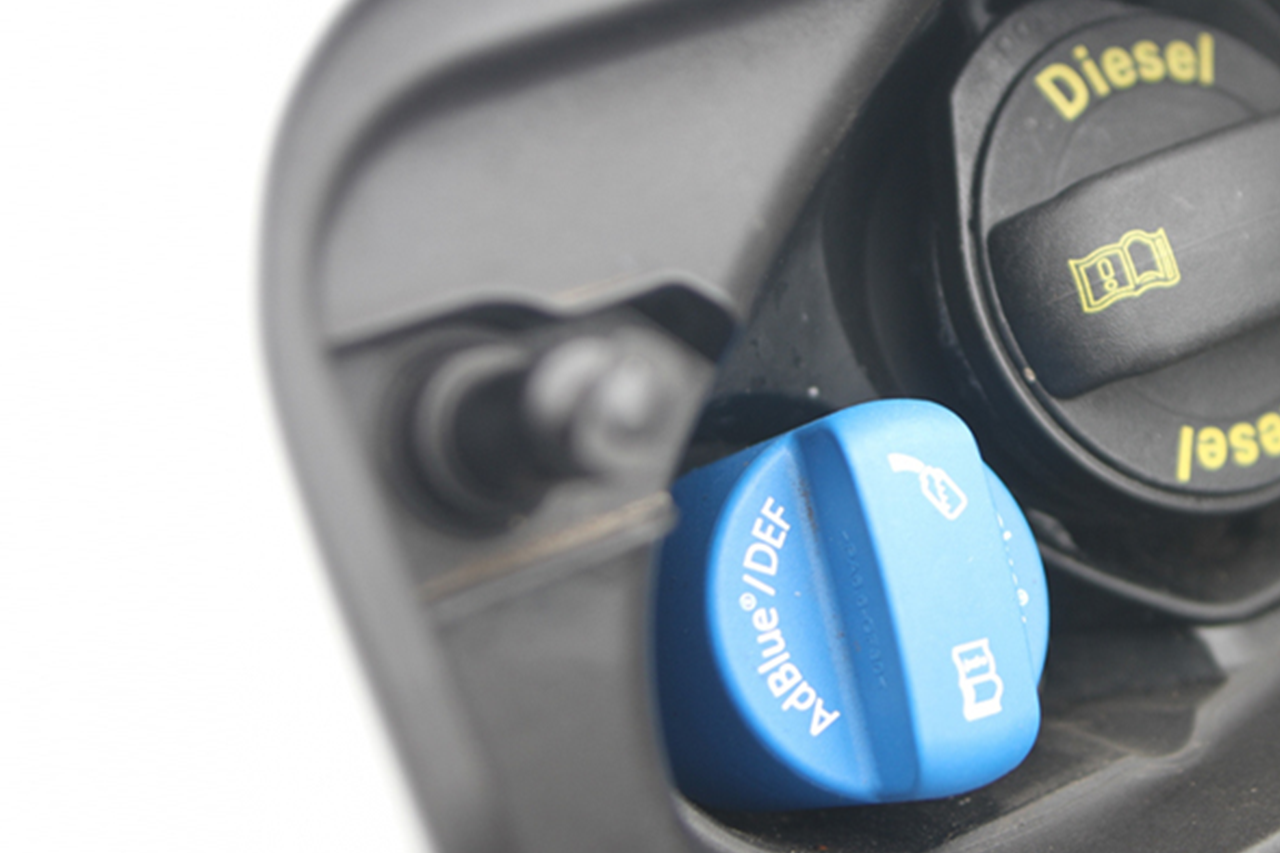
Level Sensors for AdBlue/Diesel Automotive Fluid Monitoring
The ability to detect the presence or absence of AdBlue in the storage tank is critical to ensuring that emissions regulations are met.
Manufacturers of modern Diesel engine driven Off-highway vehicles employ the Selective Catalytic Reduction (SCR) using AdBlue to comply with increasingly stringent emissions legislation. To ensure the emissions criteria for NOx will always be fulfilled, AdBlue level sensors like the popular SST Optomax level switches can be employed to monitor that there is always enough of the Diesel Exhaust Fluid (DEF) in the AdBlue tank.
The adoption of Selective Catalytic Reduction (SCR) and Diesel Particulate Filter (DPF) technologies has significantly improved engine emissions performance. A typical SCR system comprises a Diesel Exhaust Fluid (DEF) tank, SCR chamber with catalyst, injector, sensors, NOx analyzer, wiring, and a control unit.
During operation, exhaust gases pass through the particulate filter and into the SCR chamber, where DEF is injected. This triggers a chemical reaction that transforms harmful nitrogen oxides (NOx) into harmless nitrogen and water.
The most widely used DEF is AdBlue—made up of 32.5% high-purity urea and 67.5% deionized water. To ensure compliance with emissions regulations, modern diesel engines are designed to limit power output when the AdBlue tank is empty, preventing vehicles from operating in violation of NOx emission standards.
SCR systems have redefined how vehicles operate: without AdBlue, they simply can’t function—similar to running without fuel.
Accurate monitoring of AdBlue levels is therefore essential to maintain SCR effectiveness and regulatory compliance. AdBlue level sensors eliminate uncertainty by tracking fluid levels and relaying real-time data to the engine control unit (ECU). Based on this input, the ECU may:
- Permit normal operation;
- Trigger warnings via visual or audible alerts; or
- Restrict engine performance until the AdBlue tank is refilled, affecting productivity if unaddressed.
Because AdBlue consumption typically accounts for 3–5% of overall fuel use in heavy-duty vehicles, a practical approach is to refill the AdBlue tank whenever the diesel tank is topped up. In remote areas without AdBlue refilling stations, keeping a spare container on hand is strongly recommended.
