Oxygen measurement plays a vital role across a wide range of industries, including industrial process control, automotive, aerospace, logistics, agriculture, and healthcare. Some applications tolerate moderate accuracy, but many demand precise and reliable oxygen sensing to ensure safety, optimise performance, and maintain efficiency. In these high-precision environments, zirconium dioxide (ZrO₂) oxygen sensors provide the preferred solution thanks to their accuracy, stability, and long-term reliability.
However, conventional zirconia sensor technology continues to present specific operational challenges that engineers must consider when selecting the most suitable oxygen measurement solution. To overcome these limitations, we have developed and supply advanced zirconium dioxide (ZrO₂) sensing technology, which offers enhanced reliability, improved measurement accuracy, and greater versatility across a wide range of applications.
Applications of Zirconia Oxygen Sensors
|
Zirconia-based oxygen sensors are widely used in combustion control systems to monitor exhaust gases in industrial boilers and furnaces. By measuring the oxygen partial pressure, these sensors help maintain optimal fuel-to-air ratios. If oxygen levels are too low, incomplete combustion can occur, leading to harmful CO emissions. Conversely, excess oxygen indicates wasted energy as the system heats unused air. Continuous monitoring with ZrO₂ oxygen analyzers enables operators to optimize combustion efficiency, reduce energy costs, and minimize environmental impact. |

|

|
In aerospace applications, zirconia oxygen sensors are integral to onboard inert gas generation systems (OBIGG). These systems remove oxygen from aircraft fuel tanks by introducing nitrogen, preventing the risk of explosion and ensuring flight safety. |
|
In data centres and document archives, ZrO₂ sensors help establish hypoxic environments to prevent fires by maintaining oxygen below combustion thresholds. Similarly, in food storage and transportation, reducing oxygen levels extends the shelf life of perishable goods such as fruits and vegetables. |

|

|
Zirconium dioxide technology is also critical in vehicle emissions testing and engine diagnostics, where high-precision oxygen measurement ensures compliance with environmental standards and optimises engine performance. |
Zirconia Sensor Operation Principles
Oxygen sensors that use zirconium dioxide as the active element typically operate based on one of two electrochemical principles, ion pumping or the Nernst effect, both of which leverage the unique ionic conductivity of ZrO₂ at elevated temperatures (above 650°C).
Ion Pumping
At high temperatures, zirconium dioxide partially dissociates, allowing oxygen ions to move freely through the crystal lattice. When a DC voltage is applied, these ions are driven across the ZrO₂ material, releasing oxygen at the anode. The amount of oxygen transported is directly proportional to the electrical charge, allowing accurate measurement of oxygen partial pressure.
The Nernst Effect
The Nernst effect describes how an oxygen pressure differential across a heated zirconia membrane generates a measurable voltage. This voltage, known as the Nernst voltage, is logarithmically related to the ratio of oxygen pressures on either side of the membrane. While highly sensitive, Nernst-type sensors often require a reference gas, which adds complexity and limits their use in compact or sealed systems.
Limitations of Conventional Zirconia Sensors
While effective, both traditional zirconia sensing methods have constraints. Ion pump sensors are sensitive to temperature fluctuations and can suffer from clogging in dusty or particulate-heavy environments (such as boiler flues). This can shorten their operational life.
Nernst-based sensors, on the other hand, often require a reference gas to maintain calibration accuracy. They may also be affected by extreme heat, making them unsuitable for specific high-temperature industrial processes.
SST Sensing’s Advanced Zirconia Technology
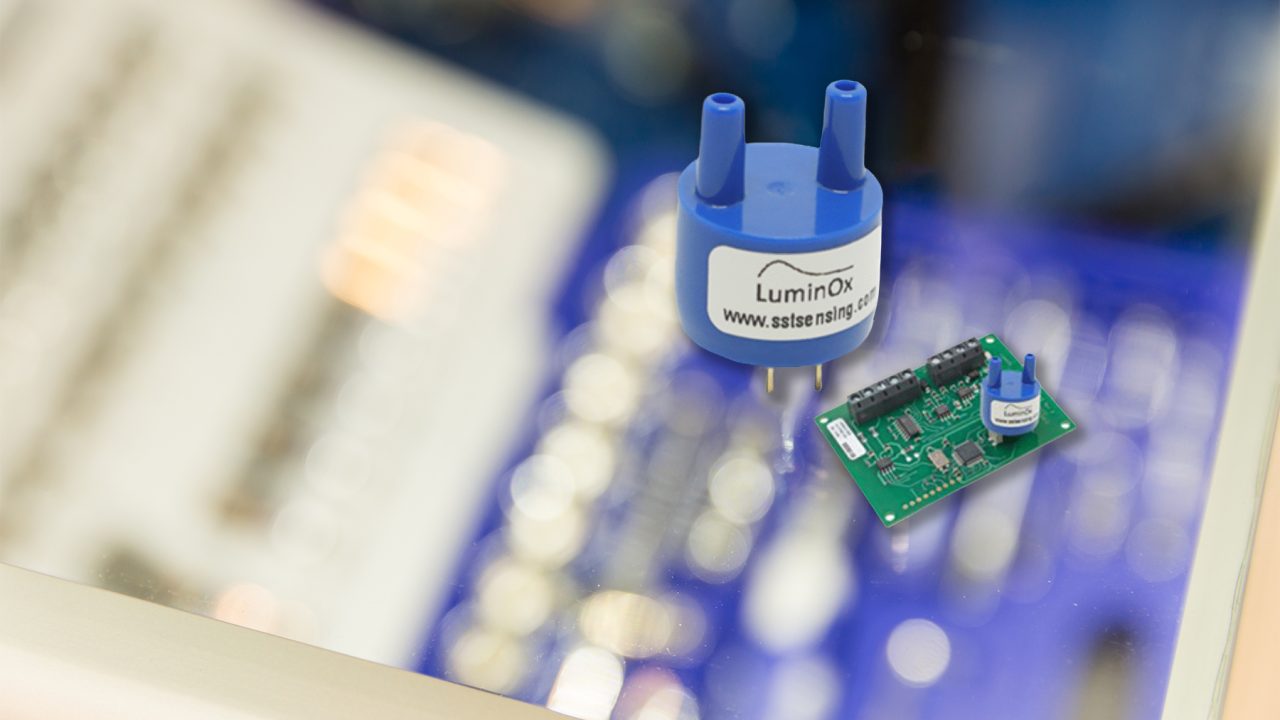
To overcome the limitations of conventional sensors, SST Sensing develops a proprietary zirconia oxygen sensing system that integrates the advantages of both ion pumping and Nernst effect principles. The sensor applies cyclic pressurisation and evacuation via oxygen ion pumping to a sealed chamber situated between two ZrO₂ elements. It then monitors the pressure changes using the Nernst effect and calculates the oxygen partial pressure from the time required to reach equilibrium. This innovative approach delivers precise, reliable, and rapid oxygen measurement across demanding industrial, aerospace, and environmental applications.
This hybrid sensing technique eliminates the need for a reference gas, simplifies installation, and significantly broadens the range of suitable applications, from industrial process control to aerospace systems.
Key Advantages of SST Zirconia Oxygen Sensors
- No reference gas required – simplifying integration and reducing system complexity.
- Extended operating temperature range – standard operation up to 400°C, with capability up to 1000°C under suitable thermal management.
- Long service life – up to 10 years, depending on the operating environment.
- Minimal maintenance and calibration requirements – reducing the overall cost of ownership.
- Rugged and reliable – suitable for harsh or particulate-laden environments.
- Built-in diagnostics – the cyclic pressurisation process provides valuable insight into sensor health and performance.
The Future of Zirconia-Based Oxygen Measurement
Through continual innovation in zirconium dioxide sensor design, SST Sensing provides robust, accurate, and maintenance-free oxygen measurement solutions that meet the demands of today’s most challenging applications. Whether for combustion efficiency, emission monitoring, aerospace safety, or controlled-atmosphere environments, SST’s zirconia sensors deliver dependable performance where precision matters most. See our range of SST Oxygen Zirconia Sensors here.