SST Sensing designs and manufactures optical liquid level sensors for all purposes, from cost-effective units to robust versions for harsh industrial environments. Our standard range suits many uses, but most OEM customers need sensors that fit their systems with minimal changes.
For customers working with high-volume production runs, efficiency on the assembly line is critical. In many cases, cutting and tin cables, attaching connectors, or adapting housings in-house is not practical. Instead, SST offers a structured customisation service to deliver sensors ready to install, reducing handling time, minimising errors, and ensuring long-term reliability.
Levels of Customisation
We customise at several levels, based on application requirements.
Basic modifications include:
- Adjusting cable length or changing to a different cable material
- Adding customer-specific connectors (minimum three-pin)
- Providing sealing options, such as washers, to simplify installation
Intermediate modifications may involve:
- Firmware adjustments, such as adding output delays to prevent false switching in moving liquids (e.g., fuel tanks or reservoirs exposed to vibration)
- Firmware optimisation for use in condensing environments or where bubbles are present
- Material changes, such as machining housings from brass as well as stainless steel
At the highest level, SST develops completely bespoke sensor designs based on a customer’s specification. These projects often require custom electronics, environmental protection components, and industry-specific validation.
Explore our optical liquid level sensors
Why OEMs Benefit from Customisation
Over the years, SST has worked with numerous OEMs that initially purchased standard sensors and subsequently outsourced modifications to third parties. This approach creates unnecessary costs and introduces variability in quality. By handling modifications directly at SST, OEM customers gain:
- Faster integration: Sensors are delivered ready for installation into equipment.
- Lower risk: Eliminates reliance on third-party modifications.
- Improved efficiency: Simplifies assembly line processes, especially at high volumes.
- Consistent quality: We manufacture and test all sensors using the same quality system.
Case Studies
Drop-in replacement for radiator coolant sensor
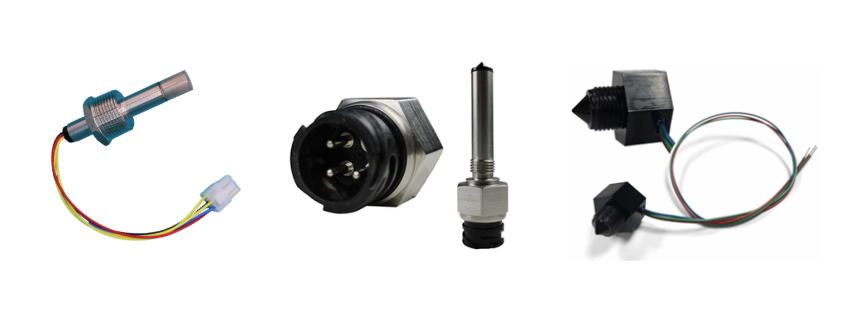
A customer in the off-highway vehicle sector required a replacement for an obsolete capacitive coolant level sensor. SST developed an optical solution capable of operating at 125 °C in a high-vibration environment. The housing was machined from brass and fitted with an integral three-pin Deutsch DT04-3P connector. The final product was a direct mechanical and electrical replacement, enabling the OEM to continue production without redesigning their system.
Diesel filter bowl sensor for CNG vehicles
In another project, SST supplied a custom liquid level switch for diesel filter bowls in compressed natural gas (CNG) powered trucks and buses. The sensor had to fit an existing M14 × 1.5 threaded port and connect to the ECU using an ISO 14173 automotive connector. The device included a pulse-width modulated (PWM) output and underwent complete EMC testing and certification for automotive use.
Customised oxygen and zirconia sensors
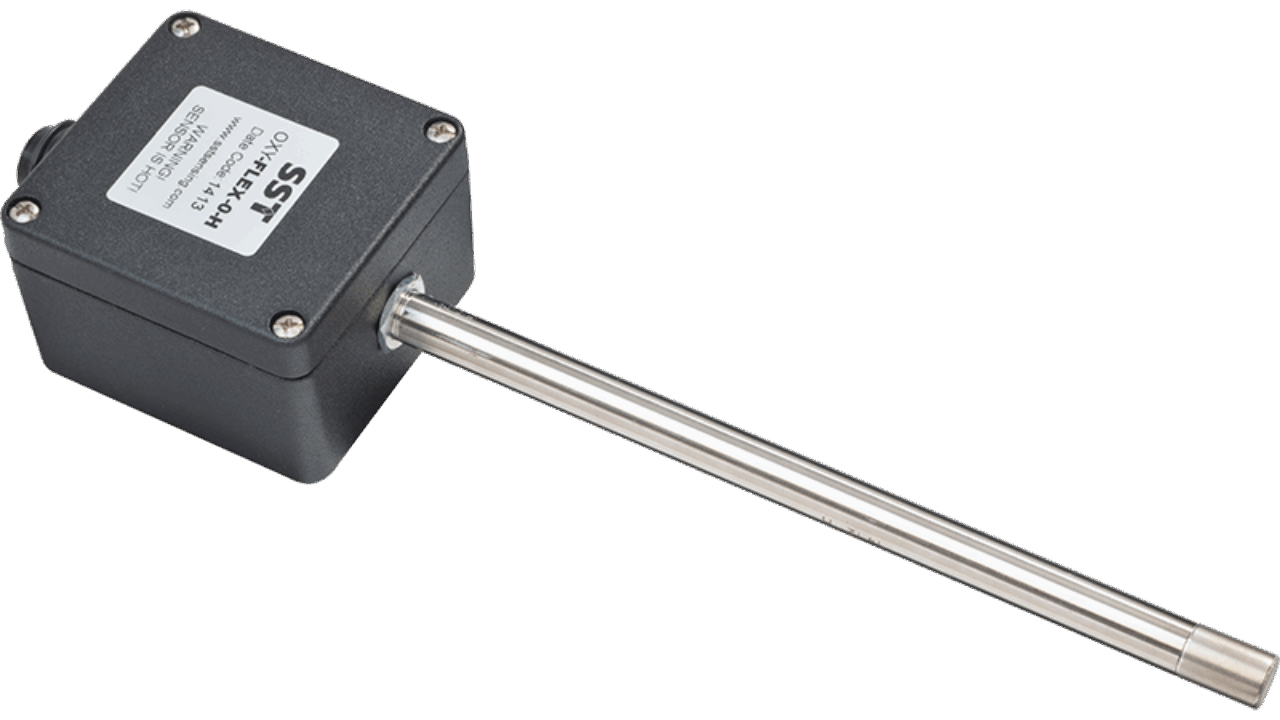
SST also customises its oxygen sensors. For example, we supply the LuminOx range with a standard full-scale range of 25% O₂, and we have built bespoke variants with a 5% range for specialised applications.
We adapt zirconia sensors for demanding environments such as steam ovens, where exposure to fat, oil, smoke, and aggressive cleaning chemicals can corrode standard sensors. SST extended the sensor’s lifetime and ensured stable performance by adding a PTFE protective filter.
Explore our Zirconia Oxygen Sensors
In conclusion
Standard sensor designs are not always the most efficient choice for OEM customers. Customisation allows sensors to be delivered in a form that integrates directly into the end product, whether that means a different cable, housing, firmware adjustment, or a fully bespoke design.
By managing modifications in-house, we reduce customers’ complexity and ensures reliable, application-ready sensors at scale. This approach reduces production effort, improves reliability, and secures long-term supply for high-volume projects.
If you are developing equipment that requires liquid level or oxygen measurement, and need solutions tailored to your exact requirements,