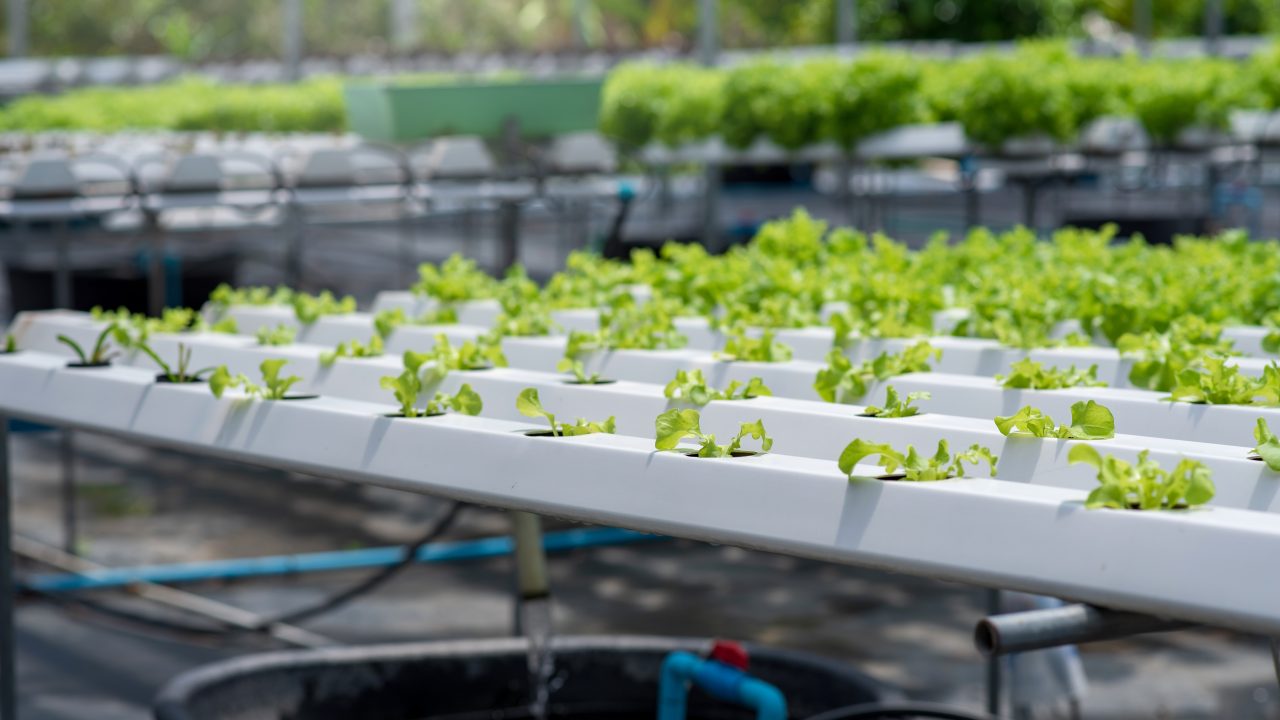
Hydroponics is reshaping agriculture by enabling soil-free plant cultivation via precisely managed nutrient solutions. Maintaining accurate liquid levels is critical for plant growth, system efficiency, and equipment longevity. Optical level switches provide reliable, continuous liquid-level detection for hydroponics, enabling automation and consistent system operation.
By delivering solid-state, non-contact liquid detection, optical sensors are well-suited to the demanding and often nutrient-rich environments found in hydroponic applications.
The Importance of Liquid Level Control in Hydroponics
Hydroponic systems depend on a carefully balanced supply of water and nutrients to support plant growth. If liquid levels fall too low, pumps can run dry, and roots may become stressed. If levels rise too high, overflow conditions or oxygen deprivation in the root zone can occur.
Accurate hydroponic tank level sensors help maintain this balance by ensuring:
- Stable nutrient delivery to plant roots
- Protection of pumps from dry running
- Prevention of overflow and system leaks
- Consistent growing conditions across cycles
How Optical Level Switches Work in Hydroponic Systems
Optical level switches use infrared light and optical refraction to detect liquid at a specific point in a reservoir or tank. An infrared LED emits light into a prism. A phototransistor receives the reflected signal. The light’s behavior changes based on whether the sensor is in air or submerged in liquid. When the sensor is dry, light reflects internally within the prism and returns to the receiver. This indicates that the liquid level is below the sensing point. When submerged, the prism’s refractive index changes, so light escapes into the liquid rather than reflecting, reducing the amount of returned light and triggering the sensor’s output. This method enables fast and reliable point-level detection, making it suitable for automated hydroponic control systems.
Advantages of Optical Level Switches in Hydroponics
Optical level switches provide distinct advantages over mechanical and conductive sensors for liquid monitoring. One key benefit is the lack of moving parts. This solid-state design eliminates mechanical wear and reduces the risk of sticking or failure caused by mineral deposits, algae, or biofilm in nutrient solutions. This maintains essential sensor reliability in these types of environments where fertilizers and additives are frequently present. Optical sensors offer high fixed-point accuracy, often detecting level changes as small as 1 mm, enabling precise fluid control for automated refills and dosing. They respond almost instantly to liquid presence. Because detection relies on optical rather than mechanical principles, switching is in milliseconds, beneficial for real-time control systems. Their compact construction enables integration into small reservoirs, nutrient tanks, and tight vertical farming spaces where sensor size is a limiting factor. With sealed, solid-state surfaces and no moving parts, optical level switches require minimal maintenance and ensure long-term sensor reliability in demanding conditions.
Application in Hydroponic Systems
Optical level switches are widely used across different types of hydroponic installations, including:
- Low-level detection to protect circulation pumps from dry running
- High-level monitoring to prevent reservoir overflow
- Automated refill control systems for nutrient tanks
These sensor applications reduce manual monitoring, enabling more efficient automated system management, stabilizing hydroponic operations and maximizing plant growth.
SST Sensing Optical Level Switches for Hydroponics
SST Sensing optical sensors deliver dependable liquid level monitoring for hydroponics and other demanding applications. The sensors can detect the presence or absence of liquid with very small switching thresholds, requiring as little as 1 mm of liquid to trigger a response. This enables precise control in systems where small changes in level can have a significant impact. With transistor outputs, these sensors easily interface with PLCs, controllers, and dosing systems for streamlined integration into modern hydroponic automation. SST’s Optomax Digital and Industrial ranges are manufactured in chemically resistant materials such as polysulfone and Trogamid, ensuring compatibility with a wide range of nutrient solutions. Optional hydrophobic coatings are available for applications requiring additional surface protection. These features suit both small-scale hydroponics and large commercial setups.
Frequently Asked Questions
How do optical level switches work in hydroponic systems?
They detect changes in reflected infrared light caused by the presence or absence of liquid at a sensing point, enabling precise level monitoring.
How do optical liquid level switches function in hydroponic systems?
They use a prism and infrared light. When submerged, the altered refractive index changes the light path, triggering output.
How do optical sensors compare to other level sensors in hydroponics?
Optical switches are more reliable than floats, less affected by fluid properties than conductive probes, and more stable than many non-contact types.
Conclusion
Optical level switches offer a precise, durable, and low-maintenance solution for liquid-level monitoring in hydroponic systems. Their solid-state design, fast response, and resistance to contamination make them particularly well-suited to nutrient-rich environments where reliability is essential. SST Sensing’s optical sensors deliver reliable performance for a range of hydroponic uses, supporting accurate nutrient control and stable operational conditions.
Speak with an expert
To discuss your application or how our liquid level sensors can help, please contact one of our technical team today.