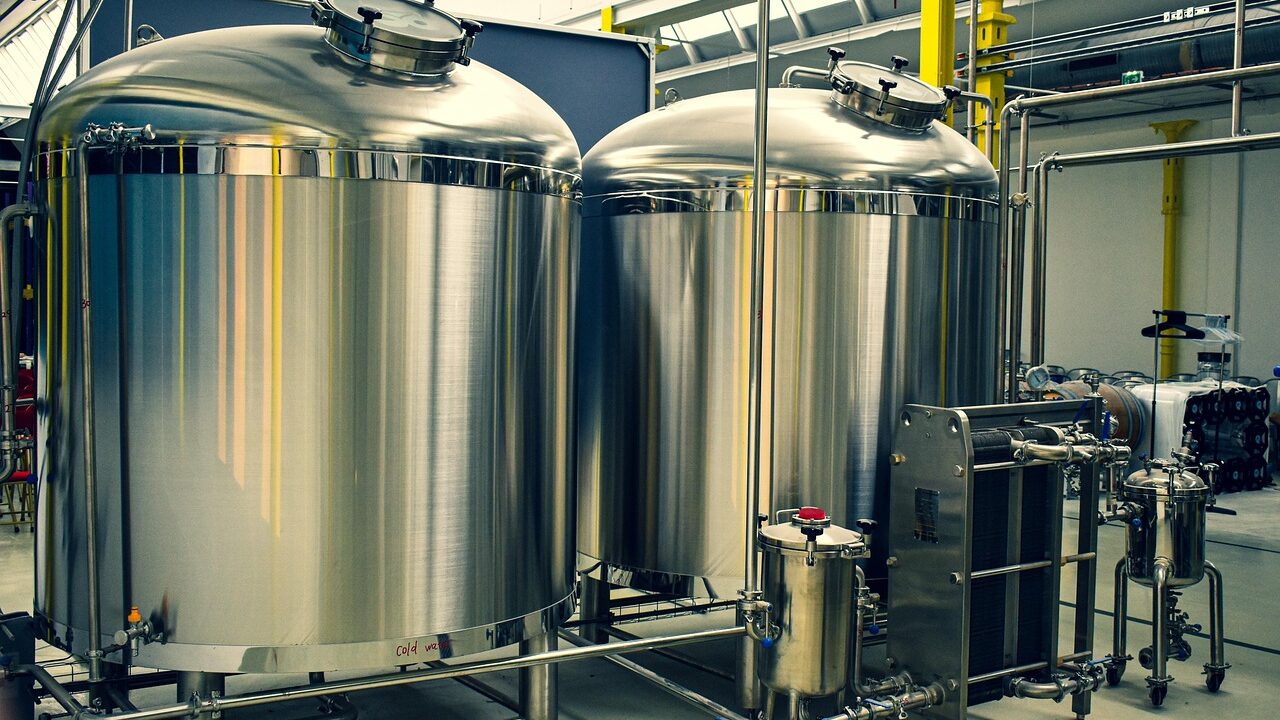
Food and beverage fermentation is essential to the production of bread, dairy products and alcoholic drinks. Maintaining consistent quality, however, requires careful control of the fermentation environment.
This article explains how an oxygen sensor for fermentation can support precise process monitoring and consistent production. You’ll learn how Zirconia Oxygen Sensors measure oxygen concentration or partial pressure in gas. In fermentation systems, they can monitor process gas, vessel headspace or off-gas to help operators maintain the required conditions.
Understanding Food and Beverage Fermentation
Fermentation is a biochemical pathway that converts sugars into acids, gases, or alcohol. It occurs naturally in yeast and bacteria. In industrial food production, fermentation is indispensable, but it’s not without its difficulties.
Common fermentation challenges include:
-
Microbial Health Management: Successful fermentation depends on maintaining healthy, active microorganisms such as yeast and bacteria. Controlling factors such as temperature, pH, and nutrient levels helps create the optimal conditions for consistent, reliable fermentation.
-
Contamination Control: Unwanted microbes can disrupt fermentation, compromising the safety, flavor, and texture of the product. Maintaining hygienic and controlled processing is essential to prevent contamination.
-
Consistency and Quality Assurance: Inconsistent fermentation process control can affect flavor, alcohol content and other quality measurements.
-
Optimizing Fermentation Conditions: Effective fermentation oxygen control requires careful management of process duration, temperature and oxygen concentration. Both over- and under-fermentation can negatively impact product quality.
-
Scaling Up Production: Conditions established during small-scale production may be difficult to reproduce in larger vessels. Consistent oxygen measurement helps manufacturers compare process conditions as production scales.
-
Energy Use: Maintaining fermentation conditions can be energy-intensive. Improving efficiency without sacrificing quality is a continual challenge.
-
Waste Management: Fermentation by-products can pose environmental and logistical issues, especially in large-scale settings. Effective waste handling is essential for sustainability.
Zirconia oxygen sensors help manufacturers monitor and control fermentation conditions.
What Are Zirconia Oxygen Sensors?
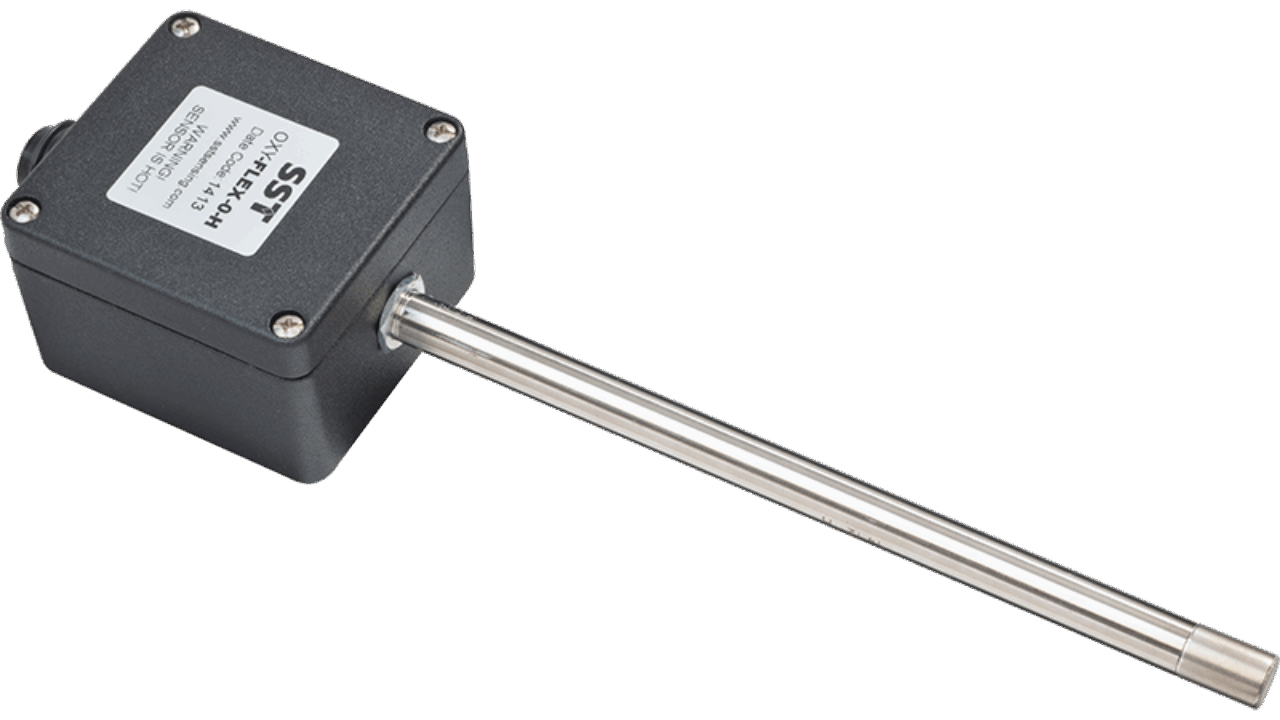
Zirconia Oxygen Sensors (or Zirconium Dioxide Oxygen Sensors) are high-precision devices that measure oxygen concentration in various environments, including fermentation systems. They use the conductivity of heated zirconia ceramic to measure oxygen levels. Fermentation headspace oxygen measurements help operators identify changes in the gas surrounding the product without implying direct measurement of dissolved oxygen.
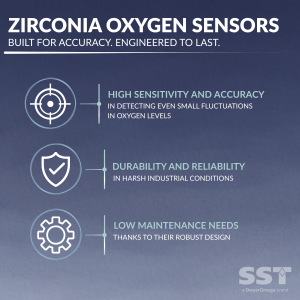
Key benefits include:
-
High sensitivity and accuracy in detecting even small fluctuations in oxygen levels
-
Durability and reliability in harsh industrial conditions
-
Low maintenance needs, thanks to their robust design
Learn more about our Oxygen Zirconia Sensors
Advanced Zirconia Sensors | Precision Oxygen Measurement
Selecting the Right Zirconia Oxygen Sensor | SST Sensing
How Zirconia Sensors Support Fermentation Process Monitoring
-
Precise Oxygen Control: Maintaining optimal oxygen levels is crucial. Oxygen monitoring in brewing helps operators understand conditions that may affect yeast activity, fermentation performance and product flavour. These sensors offer real-time data, enabling fine-tuned oxygen management throughout fermentation.
-
Supporting Microbial Health: Microorganisms involved in fermentation have specific oxygen needs. Zirconia sensors help maintain ideal environments for microbial activity, whether aerobic or anaerobic, ensuring fermentation proceeds as intended.
-
Limiting Unwanted Oxygen Exposure: In many fermentation stages, excess oxygen is undesirable. In beer and wine production, unwanted oxygen exposure can affect flavour, encourage oxidative reactions and disrupt controlled process conditions. Gas-phase oxygen monitoring helps operators identify changes before product quality is affected.
-
Boosting Efficiency and Minimizing Waste: Real-time oxygen monitoring allows for immediate adjustments, helping avoid failed batches and reducing waste. This improves both product quality and production economics.
-
Ensuring Product Consistency: Consistency across batches is crucial for consumer trust. Zirconia Oxygen Sensors support reliable, repeatable fermentation conditions—essential for maintaining flavor, texture, and other quality attributes.
-
Enabling Data-Driven Optimization: Connected monitoring systems can record oxygen measurements over time. This data can support process evaluation, recipe refinement and continuous improvement.
-
Facilitating Scalable Production: Scaling up fermentation without losing quality is complex. Consistent oxygen measurement can support batch consistency in fermentation as production moves from small batches to larger vessels.
Frequently Asked Questions
Why is oxygen measurement important during fermentation?
Oxygen availability can affect microbial activity, oxidation and product consistency. Monitoring oxygen in the process gas, fermentation-vessel headspace or off-gas helps manufacturers identify changing conditions and maintain greater control over food and beverage fermentation.
Where can a zirconia oxygen sensor measure oxygen in a fermentation system?
A zirconia oxygen sensor can measure oxygen in a gas sample taken from the vessel headspace, process-gas supply or fermentation off-gas. It measures gas-phase oxygen concentration or partial pressure rather than dissolved oxygen directly within the liquid.
How can oxygen monitoring improve fermentation consistency?
Continuous oxygen measurement helps operators compare conditions between batches and identify unexpected changes. When integrated with a monitoring or control system, this information can support process adjustments and help maintain repeatable fermentation conditions.
What should engineers consider when selecting an oxygen sensor for fermentation?
Engineers should consider operating temperature, oxygen measurement range, response time and long-term stability. Maintenance requirements and system integration must also be assessed. Matching the sensing technology to these requirements helps support reliable oxygen measurement.
Conclusion: The Value of Zirconia Oxygen Sensors in Fermentation
Incorporating Zirconia Oxygen Sensors into fermentation processes delivers significant advantages for food and beverage manufacturers. Real-time oxygen measurement in fermentation vessels can help operators maintain controlled process conditions. The benefits include improved product quality, reduced production waste, enhanced energy efficiency, and greater consistency across batches. Additionally, the data collected enables continuous process optimization and informed decision-making.
Zirconia oxygen sensors provide more than basic process monitoring. Their measurement data can support process improvement, efficient production and consistent product quality.
If you’re looking to improve oxygen monitoring in your fermentation process or would like guidance on selecting the most suitable oxygen sensor for your application, our engineering team is here to help. If you want to improve gas-phase oxygen monitoring in your fermentation process, contact SST’s engineering team. We can help assess your measurement range, operating conditions and integration requirements.